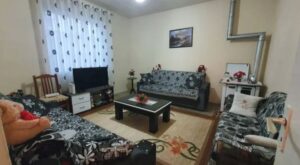
About 38% of families in Albania are not able to keep their homes warm due to low income and costs, while the country still does not have a special program to link the financing of housing renovation or the improvement of heating to families in energy poverty.
The finding comes from the 2026 report on the implementation of the Green Agenda in the Western Balkans, which analyzes developments during 2025.
The report puts this problem in front of reducing the price of electricity for households, Albania's main measure during 2025 for energy affordability.
From February, the tariff for household consumers who used up to 700 kWh per month was reduced from 9.5 Lek/kWh to 8.5 Lek/kWh, or by 1 Lek per kilowatt. Of the approximately 1.07 million household contracts, approximately 95%s fall within this consumption band and benefit from the lower tariff.
However, the report estimates that the price reduction does not solve the structural problem of energy poverty. According to the data cited in the document, 27% of the population constantly faces difficulties to pay utility services, while the percentage of families that fail to provide adequate heating reaches 38%. The report qualifies this as the highest level of energy poverty in Europe.
The Social Protection Strategy 2024–2030 envisages measures against energy poverty, including the consolidation of financial schemes and the promotion of solar panels in rural areas. Even Albania's Reform Agenda foresees the gradual adaptation of tariffs to market prices, accompanied by measures for families in energy poverty.
However, the report finds that until 2025 there was no dedicated program to direct grants for housing renovation or heating systems improvement specifically to these families.
The contrast with some countries in the region also shows the type of interventions that the report considers necessary. In Montenegro, for example, more than 4,500 households were involved in energy efficiency measures by March 2025, over 2,500 applications were approved and the program had a total value of over 15 million euros. Grants reached up to 10,000 euros per beneficiary for replacement of windows, thermal insulation, solar panels and efficient heating systems.
This shifts the problem in Albania from the price of energy to the quality of housing and the ability of low-income families to invest in energy efficiency.
Precisely for this reason, the report recommends that financing for the renovation of buildings in the Western Balkans be directed more towards families in energy poverty and not only towards consumers who have capital to invest. /ecofin.al